
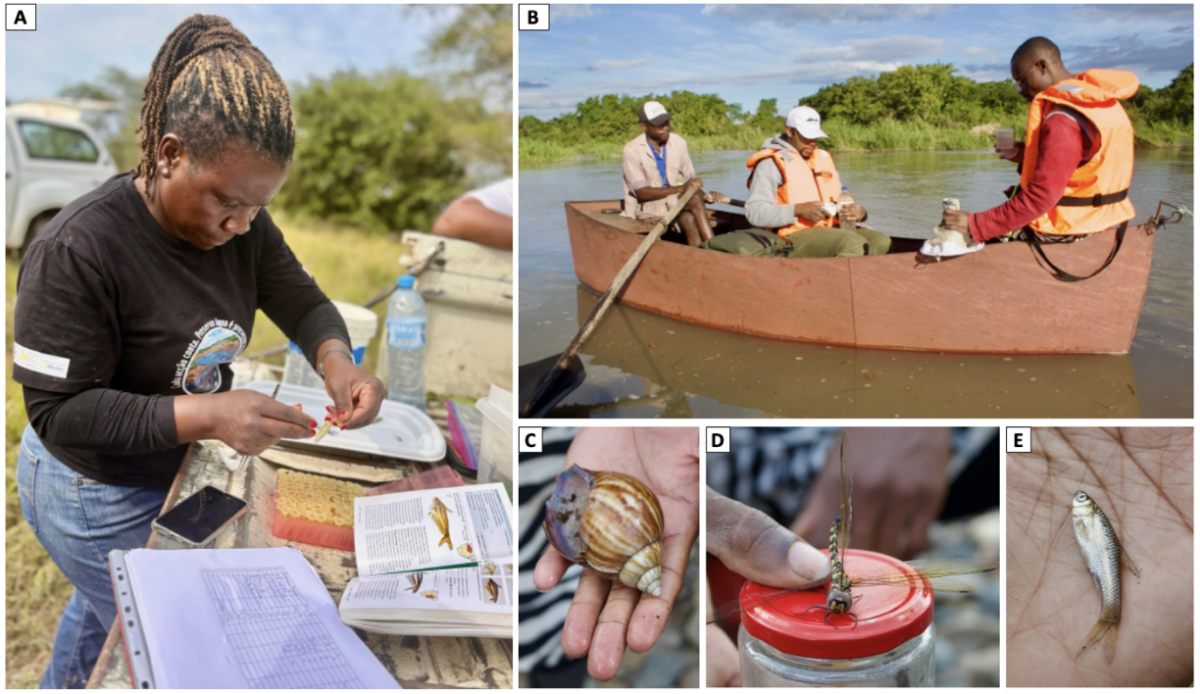
Over the past 6 months, JRS grantee The Association for Water and Rural Development (AWARD) has met significant milestones achieved across transboundary field monitoring, data mobilization, capacity building and training as well as institutional partnerships and network building with their Biodiversity Systems Management and Analytics for the Restoration of Transboundary Rivers of South Africa, Mozambique and Eswatini (BIO-SMART Phase 2) project.
The team checked in with a report highlighting : two conference abstracts within a project-convened congress session, the first fish-tracking array in the Mozambican Incomati, a live cross-border telemetry dashboard, and a set of filmed interviews with named water leaders from all three basin states.

Telemetry across an international border. FISHTRAC now spans the South Africa–Mozambique border: fourteen stations installed, seven of them in Mozambique between 12 and 14 May 2026, with tagged Tigerfish acting as living early-warning sensors for river condition.
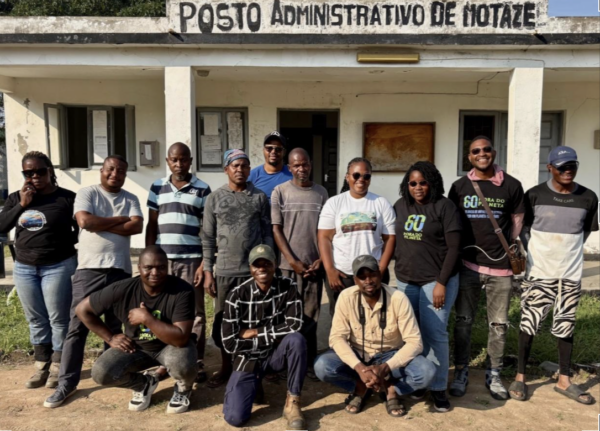
Correcting a data inequity, with a number attached. The Freshwater Biodiversity Information System (FBIS) holds 836,059 freshwater biodiversity occurrence records for the Incomati basin across 67,424 sites and 2,804 taxa — and 95% of them are South African, 4% Eswatini and 1% Mozambican, in a basin of which Mozambique is roughly a third. The project has so far uploaded 54,000 records through its own data-mobilisation team, with eleven further datasets in preparation. This is a precise, citable illustration of why transboundary data mobilisation matters.
Two abstracts at South African Society of Aquatic Scientists (SASAqS) 2026. Presented at SASAqS 2026 within a Fish Tracking and Telemetry session effectively convened by the project “Tracking Tigerfish across borders” (Retief, van der Merwe, O’Brien, Cambula, Oficiano, Fondo, du Toit and Clifford-Holmes) and “From records to response: mobilising freshwater biodiversity data for decision support in the Incomati River Basin” (Fondo, Dallas, O’Brien, van der Merwe, Cambula, du Toit, Mabunda, Mongwe, Kotschy, Retief and Clifford-Holmes). The author lists span six institutions across three countries.
The AWARD BIO-SMART Phase Two project builds on the foundation laid in BIO-SMART Phase One (a JRS-supported grant funded in 2019), and expands efforts to foster transboundary cooperation and build capacity by using biodiversity data for water resource management across the Inkomati River Basin. This critical rivershed spans a large portion of South Africa’s Mpumulanga Province and covers a portion of norther Eswatini before flowing eastward into Mozambique.
This project will enhance access to standardized biodiversity data and interpretive tools, with a focus on transboundary collaboration and robust capacity building. Read more about the Biodiversity Systems Management and Analytics for the Restoration of Transboundary Rivers of South Africa, Mozambique and Eswatini (BIO-SMART Phase 2) project