
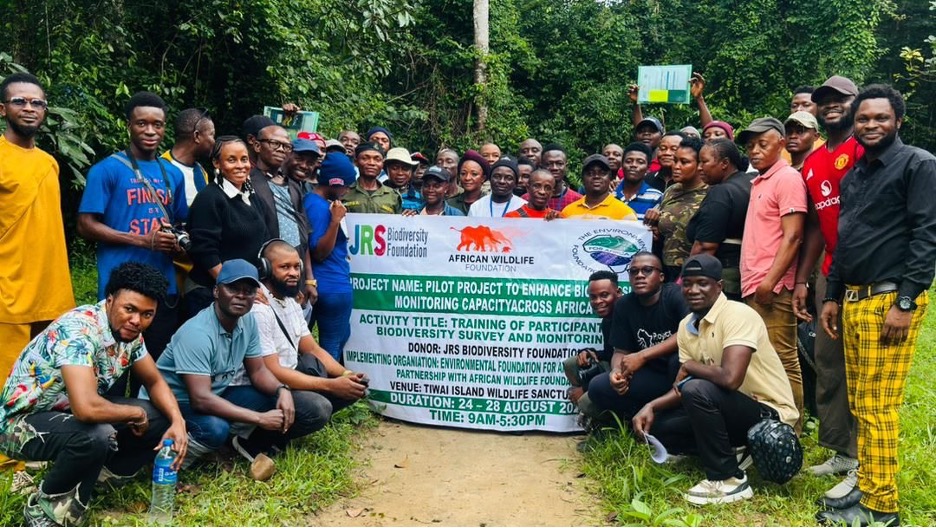
JRS grantee African Wildlife Foundation (AWF) in partnership with The Environmental Foundation for Africa (EFA) brought together 40 conservation stakeholders at Tiwai Island Wildlife Sanctuary for a five-day Biodiversity Monitoring and Conservation Capacity Building Training to learn how to observe, document, and better protect the species and ecosystems that make Sierra Leone unique — strengthening the human network behind the country’s newest UNESCO World Heritage Site. The team at AWF submitted the following report after this successful training in August.
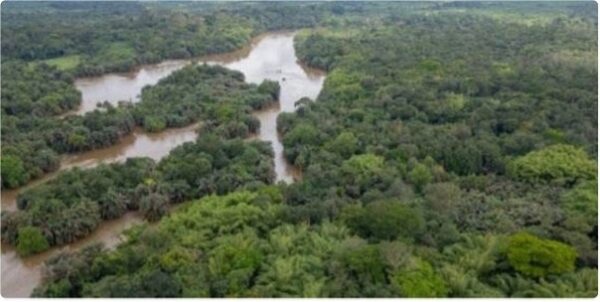
Biodiversity monitoring in Sierra Leone calls for practical expertise in ecosystem assessment, environmental impact mitigation, and regulatory compliance suited to the country’s terrestrial, coastal, and mining-heavy landscapes. These skills are critical as Sierra Leone faces an ecological crisis that threatens its economy, food security, and human survival: human activity and climate pressures have left just 5% of the country’s mature natural forest intact.
For Timothy Kebba Conteh, an Environmental Officer at the Environment Protection Agency, monitoring is about taking stock before it’s too late:”As a nation, we have to be able to take stock of our natural capital. Without consistent monitoring, ecosystem changes can go unnoticed until the consequences are far harder to reverse.” Effective conservation depends on knowing which species are present, how they interact with their environment, and how ecosystems shift over time. For Jonathan Aruna Musa, Lecturer at Njala University, monitoring is fundamentally about tracking change over time. Repeated observation, he explained, helps researchers detect shifts in species populations, spot emerging threats, identify invasive species, and recognize when an ecosystem is under pressure, turning monitoring into more than counting. It becomes a way of listening to the ecosystem itself.
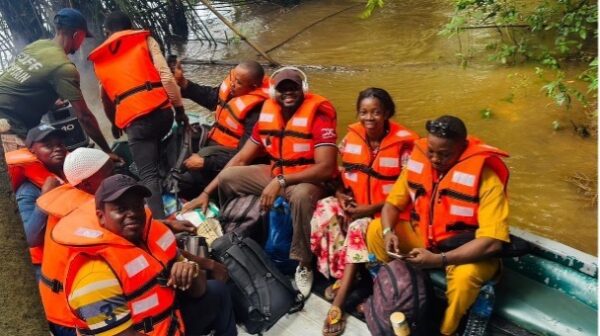
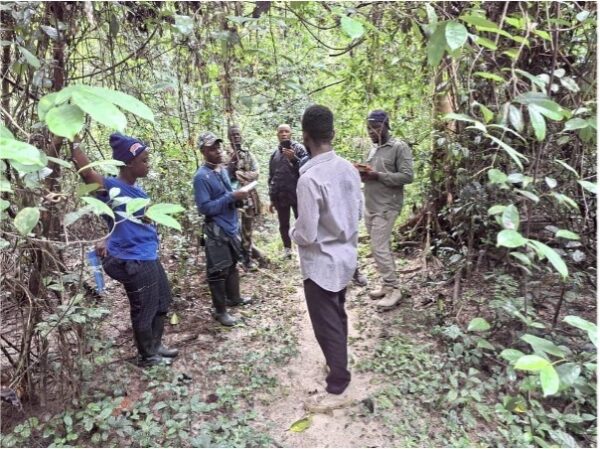
Much of the learning happened outside the classroom. Participants moved into the forest and surrounding areas of Tiwai to put theory into practice, carrying out vegetation assessments, exploring amphibian survey methods, observing birds, learning primate monitoring techniques, and working hands-on with camera traps.
For Mohamed B. Koroma, Lead Forest Guard and Community Liaison at Tiwai, the training connected directly to work he already does on the ground. He described learning to measure and count trees, conduct primate surveys, monitor birds and amphibians, and correctly position camera traps using GPS. “This training had a lot of impact on me,” he said. For students like Gabriel Bangura, studying Biological Science with a focus on Environmental Biology at Fourah Bay College, the field experience turned classroom theory into something tangible. “The things they are doing here go way beyond the classroom,” he said and after learning vegetation assessment techniques firsthand, he felt ready to take on practical conservation work independently.
The training’s most valuable outcome was also seen in the network being built among participants; Jibril Bangura of the Conservation Society of Sierra Leone described the training as directly relevant to his fieldwork: “This particular capacity building has strengthened me to know how I would handle my area of operations in the future, and how to deliver well.” As such, building local capacity is essential to sustaining conservation efforts over time. Equipping practitioners, protected area staff, researchers, and students with monitoring skills strengthens the foundation for more informed, effective conservation action across Sierra Leone and helps ensure that the country’s newest UNESCO World Heritage Site has the people in place to protect it for generations to come.
The Environmental Foundation for Africa (EFA) was established in 1992 to inspire and enable community-led programmes for sustainable environmental management as a basis for poverty alleviation in Sierra Leone and neighbouring Liberia. EFA achieves this through advocacy, awareness raising, education programmes and practical actions that conserve the integrity of nature and protect ecosystem services.
Read more about African Wildlife Foundation’s A Multiyear Capacity-Building Project to Strengthen Biodiversity Monitoring and Data Sharing in African Protected Areas project here.