

From September 8–11, 2026, JRS Executive Director, Matthew Cassetta and Program Officer Siro Masinde joined global leaders at the BirdLife Global Partnership Meeting (GPM) and the Global Flyways Summit (GFS) in Nairobi. Held back-to-back, the events convened over 400 delegates, including BirdLife partners alongside global leaders in conservation, business, policy, philanthropy, and finance. BirdLife International is a global partnership dedicated to protecting birds and all life on Earth, serving as a leading authority on birds through world-class research, practical conservation solutions, and policy influence.
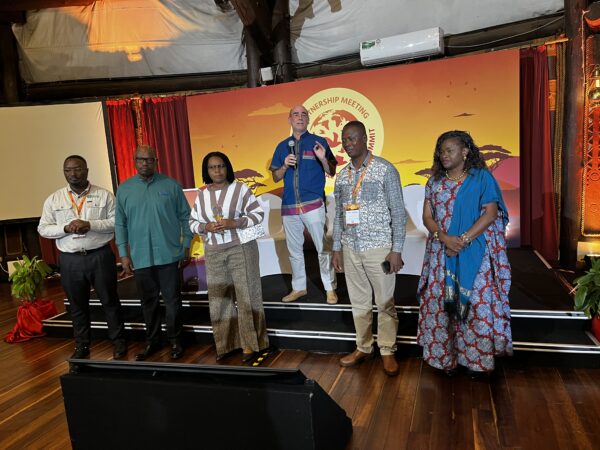
The GPM program brought together BirdLife Partners from 123 countries for plenary and parallel sessions focused on sharing achievements, challenges, lessons and emerging approaches to conservation. Across 11 thematic areas, panels, discussions and knowledge-sharing sessions provided opportunities for participants to showcase their work, exchange best practices and explore how the conservation community can build the knowledge, skills and partnerships needed to respond to rapidly evolving global environmental challenges.
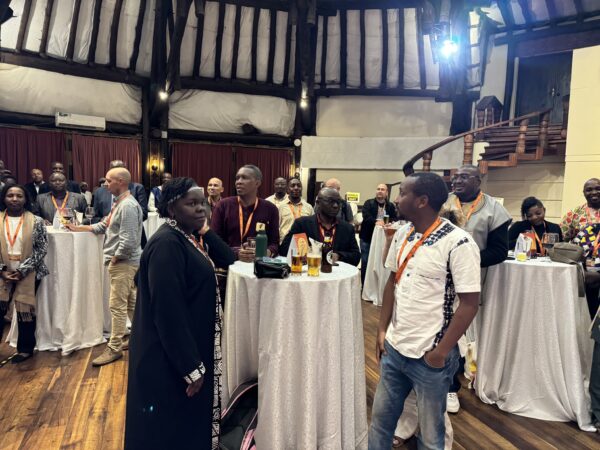
On September 8th, JRS hosted a dinner bringing together of 80 members of African BirdLife Partner organizations and other invited guests. The dinner was organized in partnership with the BirdLife Africa Secretariat and Nature Kenya, the local host of the GPM and GFS. The event provided a relaxed setting for strengthening relationships among conservation organizations, funders and partners working across Africa. Among the distinguished guests were Her Imperial Highness Princess Takamado, Honorary President of BirdLife International; Martin Harper, CEO of BirdLife International; Prof. Mike Rands, Chair of the BirdLife Council; Dr. Paul Matiku, CEO of Nature Kenya; and Dr. John Chumo, Conservation Secretary at Kenya’s State Department for Wildlife. Several current and former JRS grantees also attended the event.
A major highlight of the Global Flyways Summit was the launch by BirdLife International of the sixth State of the World’s Birds report, which highlights the continuing pressures facing migratory birds and the ecosystems on which they depend. The report finds that 45% of migratory species have declining populations, while one in nine is threatened with extinction. Migratory shorebirds and seabirds are among the groups experiencing particularly severe declines. The report identifies a range of anthropogenic pressures contributing to these declines, namely, invasive alien species and diseases, agricultural expansion and intensification, climate change, and unsustainable hunting and trapping. It also demonstrates that conservation interventions can be more effective when they are coordinated across entire migration routes rather than focused on isolated sites.
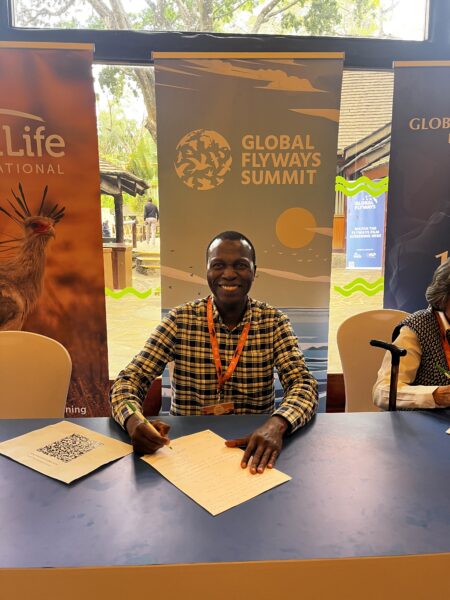
The Summit also highlighted a significant shift in the scale and nature of conservation financing. Governments, scientists, conservation organizations and financial institutions committed to a new approach to cross-border biodiversity protection through the Nairobi Flyways Declaration, signed on September 11, 2026. Multilateral development banks are increasingly integrating flyway and ecosystem conservation into mainstream development finance, with more than US$6 billion in announced financing across Asia, Latin America and Africa. The Asian Development Bank (ADB), for example, is mobilizing US$3 billion over the next decade through its Regional Flyway Initiative to protect, restore and sustainably manage at least 50 priority wetlands along the East Asian–Australasian Flyway. In Latin America and the Caribbean, the Development Bank of Latin America and the Caribbean (CAF) announced plans to mobilize between US$3 billion and US$5 billion through 2050 to safeguard more than 30 important landscapes and seascapes. The World Bank and BirdLife International are similarly working to mobilize substantial financing for conservation along the African-Eurasian Flyway.
This growing recognition of flyways within development finance reflects the interconnected nature of global ecosystems. Wetlands, forests, grasslands and coastal ecosystems provide habitat for migratory species while simultaneously supporting water security, agriculture, fisheries, tourism, climate resilience and rural livelihoods. The challenge, therefore, is not simply to choose between conservation and economic development. It is to find practical ways of aligning development and livelihood needs with the protection and sustainable management of the ecosystems on which both people and biodiversity depend. This requires better information, stronger institutions, improved planning and investment approaches that recognize the ecological connections extending across national boundaries.
For JRS, participation in the GPM and GFS provided invaluable opportunities to reconnect with former and current grantees, engage with potential partners and other funding organizations, learn about new research and approaches, and better understand emerging conservation challenges. The events also offered an important platform for sharing JRS’s work and priorities with a broad international conservation community. As conservation increasingly requires collaboration across ecosystems, countries and sectors, the ability to connect knowledge, people, institutions and finance is essential to achieving lasting conservation outcomes.