

In late May 2026, a JRS funded research team from the University of Lubumbashi’s herbarium, embarked on a botanical mission to Kundelungu National Park in the Democratic Republic of the Congo. Led by a multidisciplinary group with expertise in plant diversity and pollinator ecology, the team set out to establish the first permanent vegetation monitoring plots in the park’s biodiverse wet savannas — a region recognized as one of the country’s most ecologically significant yet understudied highland ecosystems.
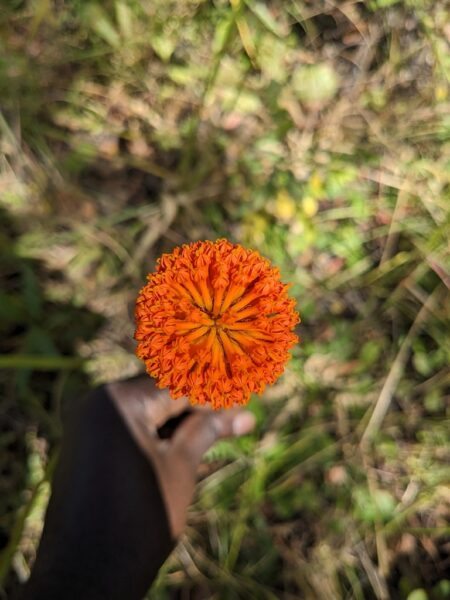
The mission achieved a milestone for botanical research in the DRC: the installation of nine permanent 50×50-meter plots following the GGG radial methodology, the first of their kind ever established in Kundelungu National Park and in the country as a whole. Across 189 subplots, the team documented over 130 plant species — a remarkable expansion of knowledge since the last survey of the same area in 1989. Among the most notable finds was Coleus pseudospeciosus, an endemic species of springhead savannas known only from southeastern DRC and Zambia, highlighting the exceptional conservation value of these habitats.

Beyond plant inventorying, the team documented the ecological interactions that sustain these fragile ecosystems, with researcher Pierre Makolo recording plant-pollinator relationships across the flowering species observed. The team noted a dominance of Apis and Xylocopa bee genera — likely owing to their tolerance of the high-altitude cold at Kundelungu’s 1,700-meter plateau — while also collecting 119 herbarium vouchers for deposit at the Lubumbashi Herbarium. Despite logistical challenges including extreme cold, flooded terrain, and equipment setbacks, the mission successfully laid the groundwork for long-term monitoring of these springhead savannas and confirmed a methodology that will guide future surveys ahead of the October–November rainy season.
Read more about the Highlighting Plant Diversity of Wet Savanna Springheads within the Katanga-Zambian Centre of Endemism project here.