
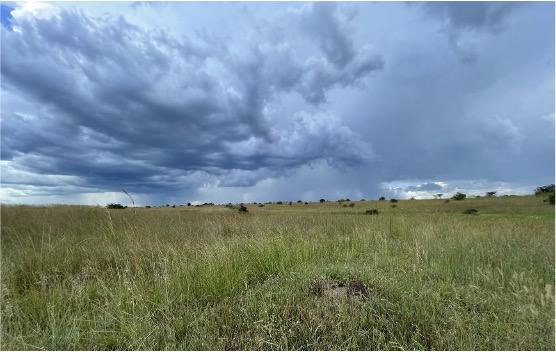
The Natural History Museum of Zimbabwe in partnership with the Dambari Wildlife Trust checks in with a field report from year two, conducting fieldwork in the Somabhula grassland (Debshan and Jabulani) in the Shangani area. Co-director, Dr. Moira Fitzpatrick shares a report summary below.
++++++++++++++++++++++++++++++++++++++++++++++++
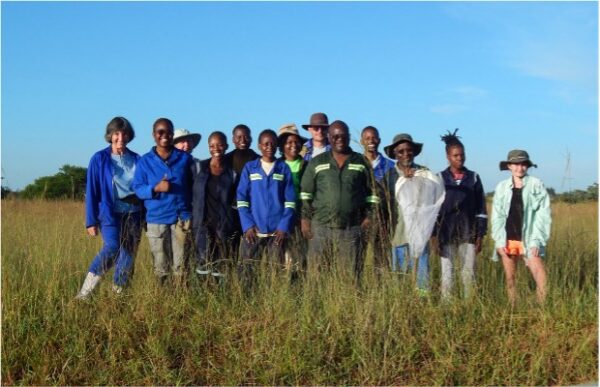
Our fourth biodiversity survey for this project, and the first of 2026 was conducted in the middle of an above average wet season 10-19 February 2026 by 14 participants from the Natural History Museum of Zimbabwe, Bulawayo staff, and students and volunteers from the National University of Science and Technology (NUST), Lupane State University (LSU), Marondera University of Agricultural Science and Technology (MUAST), Midlands State University (MSU) and the Zimbabwe Spider Club. Dr Moira FitzPatrick, Francis Nyathi, Sindiso Dube (MSU), Phephile Tshabanga (staff), Tadiwandashe Mweta (student MUAST), Dan Rautenbach and Bethia Lowson (Spider Club volunteers) made up the arachnid team while Shiela Broadley, Simbarashe Mafodya, Bernard Mupangapanga (staff), Raymond Ntini (volunteer NUST), Prosperity Nyathi (Student LSU) made up the herpetology team. Plant surveys were done by Cathy Sharp and Thandolwenkosi Ncube (student MSU).
The purpose of the field trip was to have a comparison of species found during the rainy season of the previous year to that of this year and the overall ecological changes that occur during periods of high rainfall.
COLLECTION OF SPIDERS This year we moved to different sites within the grasslands at both Debshan and Jabulani to initiate a different project to understand the diversity of spiders on a microhabitat scale. Two study plots were set up in each area parallel to small streams. These plots have five transect at 10 m intervals away from the streams and with the use of a sweep net and pitfall traps we will be obtaining baseline data on spider diversity and distribution in grasslands adjacent to watercourses as well as insight into the effect of microspatial patterns as recorded in the vegetation and soil changes as we move further from the watercourses. Data from this project will be used in fourth year undergraduate projects. A survey of the vegetation within the plots was conducted and many bog orchids not seen in the previous February were recorded indicating a much wetter grassland. In various places standing water was present and the over all condition of the grassland was green and dense and little open ground visible.
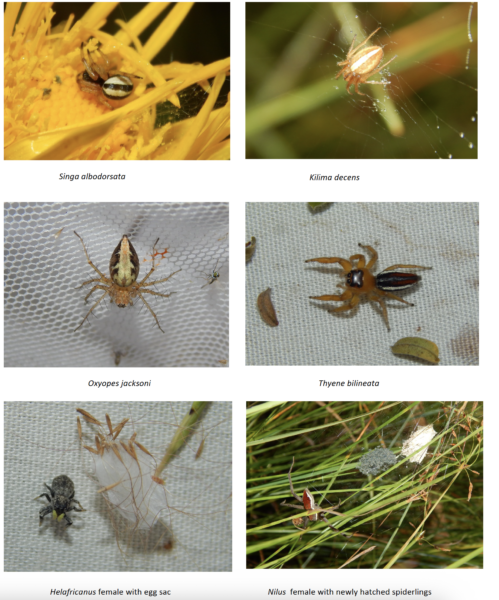
Interestingly the more dominate orb-spiders in the grasslands this year were the small black and white Singa albodorsata and the medium sized Neoscona moreli and Kilima decens. Argiope tapinolobata and A.australis were rarely recorded compared to February 2025 while Argiope trifasciata dominated the large orb-web weaver guild (above 2.5cm). Adults of the lynx spider Oxyopes jacksoni and the jumping spider Thyene bilineata were also common and many female spider species were seen with their egg sacs. Due to the wet ground the surface active spiders were not collected in high numbers as in 2025 in the pit falls traps and burrowing spiders, either wolf or baboon, were not seen.
In each sampling site the vegetation was sampled along transects recording the species present and also indicating the most abundant grasses, herbs and sedges. All plant specimens collected will be placed in the Natural History Museum, Zimbabwe herbarium. The species lists produced will be used in any future publications based on this field work and it is hoped that a checklist of plant species from the grasslands will also be included on the GBIF portal.

HERPETOLOGY COLLECTIONS At Debshan we moved to a different area closer to the Sena river. The grassland had fewer standing water puddles than in 2025 due to the fact it hadn’t rained for over a ten days and most amphibian species were found to be calling along the Sena River and not in the grasses. At Jabulani during this February trip the soil was moist and slightly muddy due to rainfall from the night before we arrived and the continuous rain for a further 24 hours. The weather during the trip was cool and humid, with intermittent light rainfall creating ideal
conditions for amphibian activity. Only late amphibian breeders were still calling and producing eggs. Most of the amphibians had already metamorphosed into small frogs which were encountered on active searching. Several temporary pools had formed both on the ground and on isolated rock outcrops, although the pools on rocks did not have any amphibian eggs. Pitfall traps were put on the first day of arrival at each study area to maximise on time that the traps were in the ground. Day active searching produced mostly the species that were collected or observed during the same time in February 2025. There were three species added for Debshan which included the Boomslang (Dispholidus typus) found in an isolated shrub in the grasses and a Spitting cobra (Naja mosambica) observed close to camp and a Green Snake (Philothamnus hoplogaster) observed in dead debri by the side of a stream. Most reptiles were collected on rock outcrops.
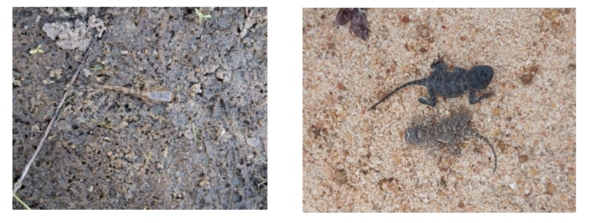
Night hunting at Debshan did not produce much due to the dry weather conditions and we only had rains on the afternoon a day before our departure. In the morning we found a number of amphibian species in our pitfall traps. During this trip we observed many ground agama hatchlings still bearing their umbilical scars. Amphibiandeveloping tadpoles of late breeders were found and young amphibians for early breeders had already dispersed being encountered on active searches.
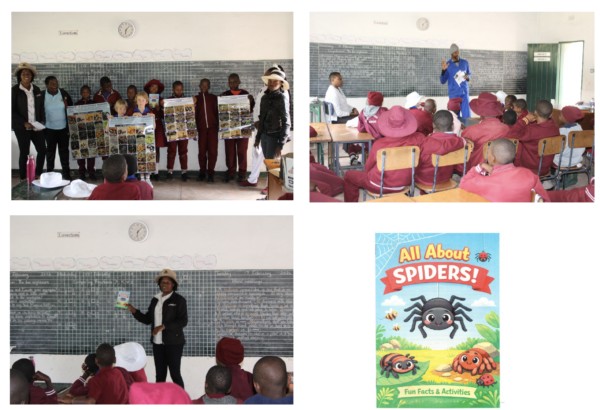
SCHOOL VISITS Two schools were visited, Debshan Primary School, Debshan and Pezulu Primary School, Jabulani. The school children were given illustrated talks on spider and reptiles. The schools were presented with updated snake posters, a herpetology pamphlet and an activity booklet on spiders.
ADDITIONAL BIODIVERSITY RECORDS Please see the INaturalist Project page for additional biodiversity records, which are being added to from time to time. Currently there are 3343 observations and 1114 species recorded from the project area on this project page. https://www.inaturalist.org/projects/somabhula-grasslands-jrs-project-25-27
Read more about the JRS funded project Somabhula Grassland Biodiversity Surveys and Capacity-building for Mozambique and Zimbabwe project here.